Toilet Flange Replacement: What It Is, When You Need It, and What the Job Looks Like
A rocking toilet or water pooling at the base is not just annoying — it is a sign your toilet flange may be failing. Here is what a real flange replacement looks like and why you should not ignore it.
A toilet that rocks slightly when you sit on it. A faint sewer smell in the bathroom. Water staining the floor around the base of the toilet. These are not just annoyances — they are warning signs that your toilet flange may be failing, and ignoring them can turn a straightforward repair into a major subfloor replacement.
Here is what a toilet flange is, why it fails, and what a real flange replacement looks like.
What Is a Toilet Flange?
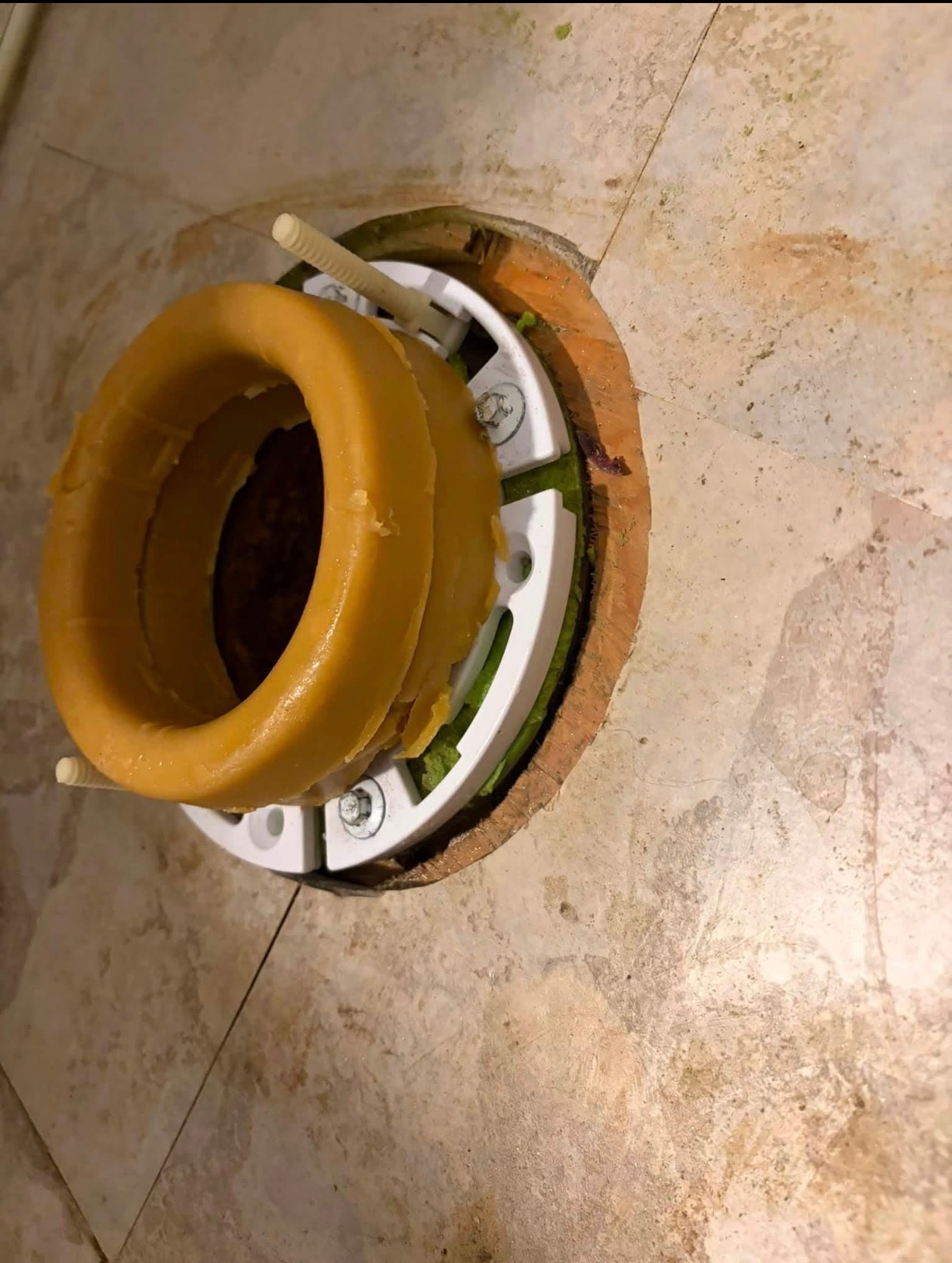
The toilet flange — technically called a closet flange — is the fitting that connects your toilet to the drain pipe in the floor. It is a flat ring, usually made of PVC or cast iron, that sits flush with the finished floor surface. The toilet bolts down to it, and a wax ring creates a watertight seal between the toilet horn and the flange.
The flange does two jobs: it anchors the toilet to the floor, and it seals the connection between the toilet and the drain. When it fails at either job, you have a problem.
Why Flanges Fail
Corrosion. Cast iron flanges — common in older Buffalo homes — rust over time. The flange ring corrodes, the bolt slots break off, and the toilet can no longer be properly anchored.
Cracking. PVC flanges can crack from overtightening the toilet bolts, from settling of the subfloor, or simply from age and stress.
Height issues. When new flooring is installed over old flooring, the flange can end up below the finished floor surface. A flange that sits too low cannot create a proper seal with the wax ring, leading to leaks at the base of the toilet.
Wax ring failure. The wax ring itself can fail if the toilet rocks — even slightly. Every time the toilet moves, it breaks the wax seal a little more. Over time, sewer water and gas start leaking past the ring.
Signs Your Flange Needs Attention
- Toilet rocking or moving when you sit on it
- Water pooling at the base of the toilet, especially after flushing
- Sewer smell in the bathroom
- Soft or discolored flooring around the toilet base — this indicates water damage to the subfloor
- Toilet that will not tighten down no matter how much you tighten the bolts
Any of these symptoms warrants a professional inspection. Do not keep tightening the bolts hoping it will fix the problem — you will crack the porcelain.
What a Real Flange Replacement Looks Like
On a recent job in Buffalo, a homeowner called us about a toilet that had been rocking slightly for a few months. They had tightened the bolts twice and it kept coming loose. When we pulled the toilet, here is what we found:
The cast iron flange had corroded through at both bolt slots. The toilet had been sitting on a wax ring with no solid anchor — just the weight of the toilet holding it in place. The wax ring had partially failed, and there was evidence of slow seepage under the floor tile.
Step 1: Remove the toilet. We shut off the water supply, flush to empty the tank and bowl, disconnect the supply line, and remove the toilet. A standard toilet weighs 60 to 100 pounds — we set it on cardboard to protect the floor.
Step 2: Remove the old wax ring and inspect the flange. We scrape off the old wax ring and inspect the flange carefully. On this job, the corrosion was severe enough that a flange repair ring would not be sufficient — we needed a full replacement.
Step 3: Replace the flange. We cut out the old cast iron flange and installed a new PVC flange, properly set at the correct height relative to the finished floor. We secured it to the subfloor with stainless screws.
Step 4: Inspect the subfloor. We checked the subfloor around the flange for water damage. On this job, there was minor softening at one edge — we dried it out and treated it before proceeding. If the damage had been more extensive, we would have recommended subfloor repair before setting the toilet.
Step 5: Install a new wax ring and reset the toilet. We installed a new wax ring — properly sized for the flange height — set the toilet over the new bolts, and pressed it firmly into place. We tightened the nuts evenly, alternating sides, until the toilet was solid with no movement. Over-tightening cracks the base, so we stop when the toilet is firm and stable.
Step 6: Reconnect and test. We reconnected the supply line, turned the water back on, and flushed multiple times while checking for any movement or leaks at the base.
The whole job took about two hours. The homeowner had a solid, leak-free toilet and no more rocking.
Can You DIY a Flange Replacement?
Replacing a wax ring is a job some handy homeowners tackle themselves. Replacing the flange itself is more involved — it requires cutting into the drain pipe, which means working with PVC cement or cast iron repair fittings, and getting the new flange set at exactly the right height. A flange set too high or too low will cause the same problems you started with.
If you are comfortable with basic plumbing and the flange is in good condition, a wax ring swap is manageable. If the flange itself is damaged, corroded, or at the wrong height, call a plumber. Getting it wrong means pulling the toilet again — and potentially dealing with subfloor damage you created.
How Much Does Flange Replacement Cost?
We provide upfront pricing before any work begins. The cost depends on the flange material, condition of the subfloor, and whether any additional repairs are needed. Call us at 716-329-2701 for a free estimate — we serve all of Buffalo and Erie County with same-day service available.
A rocking toilet is not a minor inconvenience. It is a slow leak waiting to become a major repair. Call MVP716 before it gets worse.
Explore Topics
Written by
Most Valuable Plumber LLC
Content creator and writer sharing insights and stories.