Why Every Buffalo Home Needs a Working Whole-Home Shut-Off Valve
A burst pipe at 2 AM. A washing machine hose that lets go. A water heater that starts leaking. In every one of these emergencies, the first thing you need is a shut-off valve that actually works.
Picture this: it is 2 AM on a January night in Buffalo. You hear water running. You go downstairs and find your basement flooding — a pipe has burst in the wall. You need to shut off the water to your house immediately.
Do you know where your shut-off valve is? Does it actually work?
For a lot of Buffalo homeowners, the answer to one or both of those questions is no. And that is a problem.
What Is a Whole-Home Shut-Off Valve?
Your whole-home shut-off valve — also called the main water shut-off — controls all the water coming into your house from the street. Turn it off and every faucet, toilet, and appliance in your home stops receiving water.
In an emergency, this valve is the difference between a manageable repair and a catastrophic flood. It is also essential any time a plumber needs to work on your supply lines, water heater, or fixtures.
Most Buffalo homes have their shut-off valve in the basement, near where the water main enters the foundation. Some older homes have them in a utility closet or crawl space. In some cases, the only shut-off is at the street — which requires a special tool to operate and is not something most homeowners can do themselves in an emergency.
The Problem With Old Shut-Off Valves
Shut-off valves fail in two ways: they seize open, or they seize closed.
Seized open is the dangerous one. The valve looks fine. You turn the handle. Nothing happens. The water keeps flowing. In an emergency, you are now waiting for the city to shut off the street valve while your basement fills with water.
This happens because gate valves — the old style with a round wheel handle — corrode internally over years of sitting in the open position. The gate mechanism rusts to the valve body and will not move. We see this constantly on older Buffalo homes.
Seized closed is less common but also a problem. The valve gets stuck in the closed position and you cannot restore water service without replacing it.
The fix is straightforward: replace the old gate valve with a modern ball valve. Ball valves use a quarter-turn mechanism that is far more reliable, far less prone to corrosion, and much easier to operate in an emergency. A quarter turn — that is all it takes to shut off your entire water supply.
What We Install
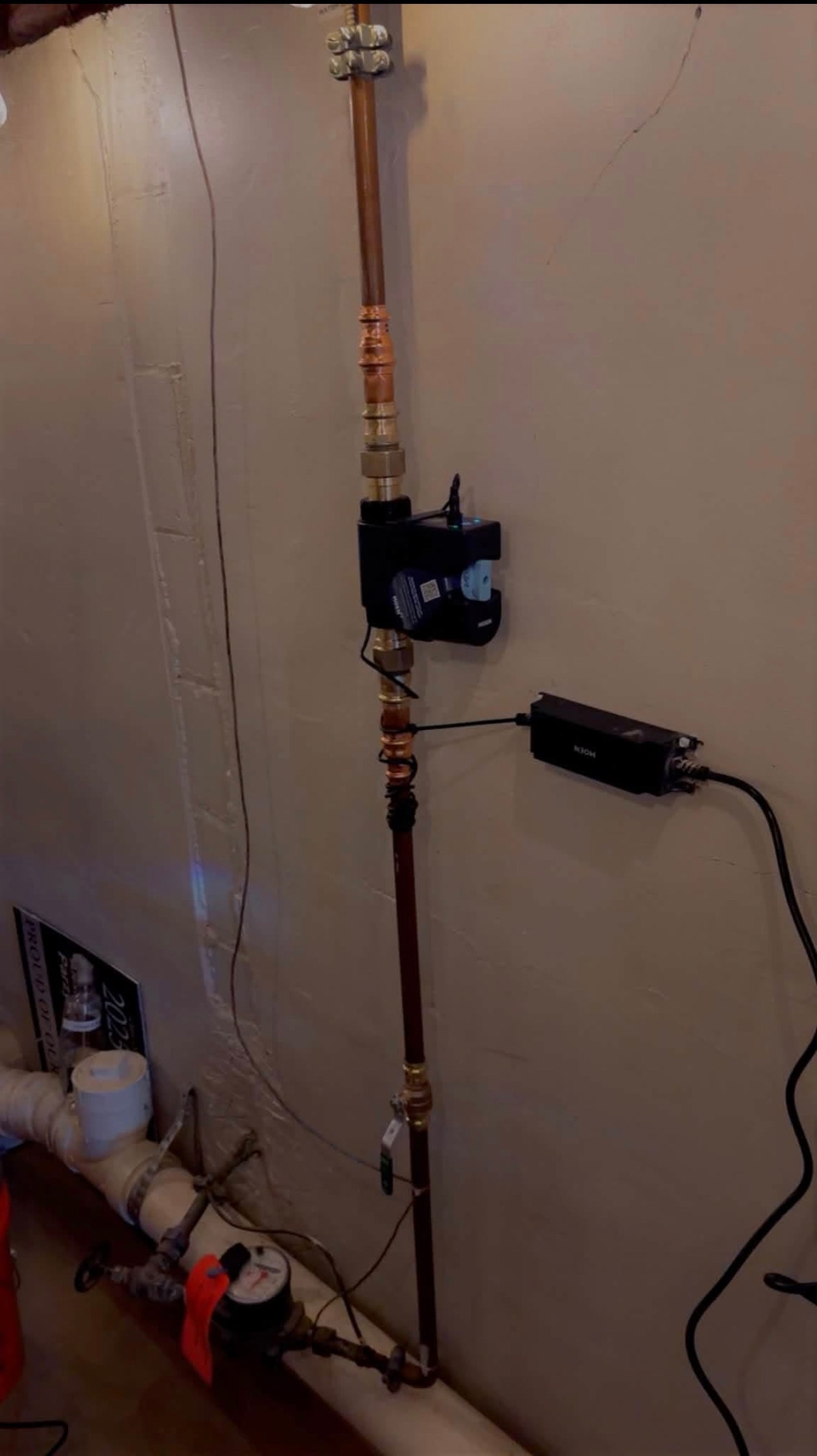
On a recent job in Buffalo, we replaced a seized gate valve with a new ball valve and installed a smart water meter on the supply line. Here is what that job looked like:
New ball valve. We cut out the old gate valve and soldered in a new full-port ball valve on the copper main. Full-port means the valve opening matches the pipe diameter — no flow restriction, no pressure drop.
Smart water meter. The homeowner wanted to monitor their water usage and get alerts for unusual flow — the kind of thing that indicates a slow leak or a running toilet that is wasting hundreds of gallons a day. We installed a smart flow sensor on the supply line that connects to their home network and sends alerts to their phone.
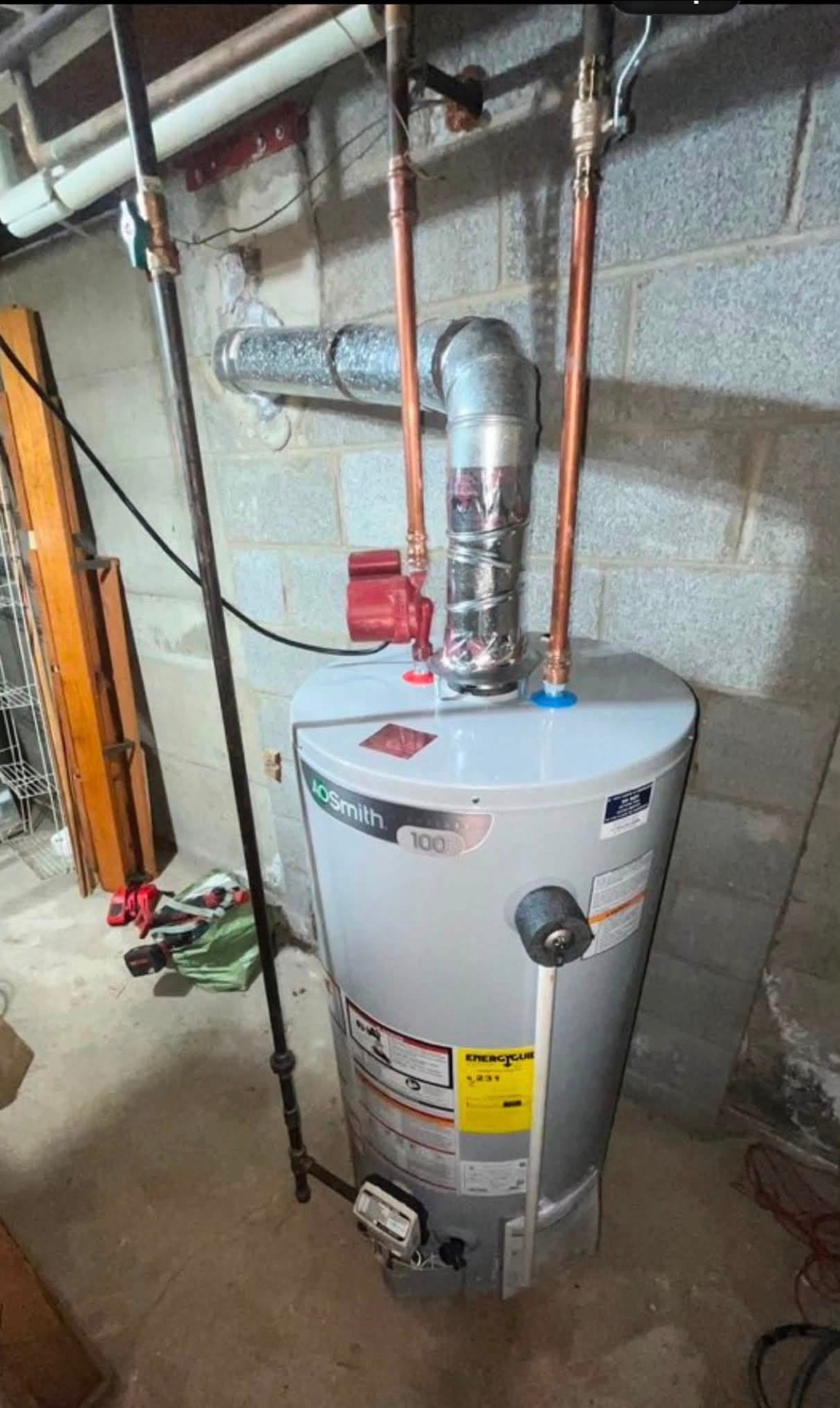
Watts press-fit shut-off valves. On the same job, we installed Watts LFFBV-3 press-fit ball valves on the hot and cold supply lines feeding the water heater. Press-fit connections do not require soldering — the fitting is pressed onto the pipe with a crimping tool, creating a watertight seal that is as reliable as a sweat joint. These give the homeowner individual shut-offs for the water heater without having to shut off the whole house.
When to Replace Your Shut-Off Valve
You should have your main shut-off valve inspected or replaced if:
- You have never operated it and do not know if it works
- The valve has a round wheel handle (old gate valve style)
- The valve is visibly corroded or leaking
- You are having any major plumbing work done — it is the right time to upgrade
- Your home is more than 20 years old and the valve has never been replaced
Do not wait until you have a burst pipe to find out your shut-off does not work. That is the worst possible time to discover the problem.
Smart Water Meters: Worth It?
If you are already having shut-off valve work done, adding a smart water meter is a relatively small additional cost with significant upside. These devices:
- Monitor real-time water flow and usage
- Send alerts when flow patterns indicate a leak
- Track daily, weekly, and monthly usage
- Can automatically shut off water when a leak is detected (on some models)
For Buffalo homeowners who travel, have vacation properties, or just want peace of mind, a smart meter is one of the best investments you can make in your home's plumbing system.
How Much Does Shut-Off Valve Replacement Cost?
We provide upfront pricing before any work begins. The cost depends on the valve location, pipe material, and whether any additional work is needed (like replacing corroded sections of pipe). Call us at 716-329-2701 for a free estimate — we serve all of Erie County with same-day service available.
Do not wait for an emergency to find out your shut-off valve does not work. Call MVP716 today.
Explore Topics
Written by
Most Valuable Plumber LLC
Content creator and writer sharing insights and stories.